
Shrink the image. Move the logic.
Keep golden images lean and deliver apps and settings just-in-time after boot.

Right Click Tools
Enhance security, compliance, and efficiency across enterprise environments
Right Click Tools Patching
Right Click Tools Insights
Right Click Tools Privileged Access
Free Tool Download
Pricing
Application Workspace
The game-changing, end-to-end application management platform
Request a Demo
Pricing
Use Case
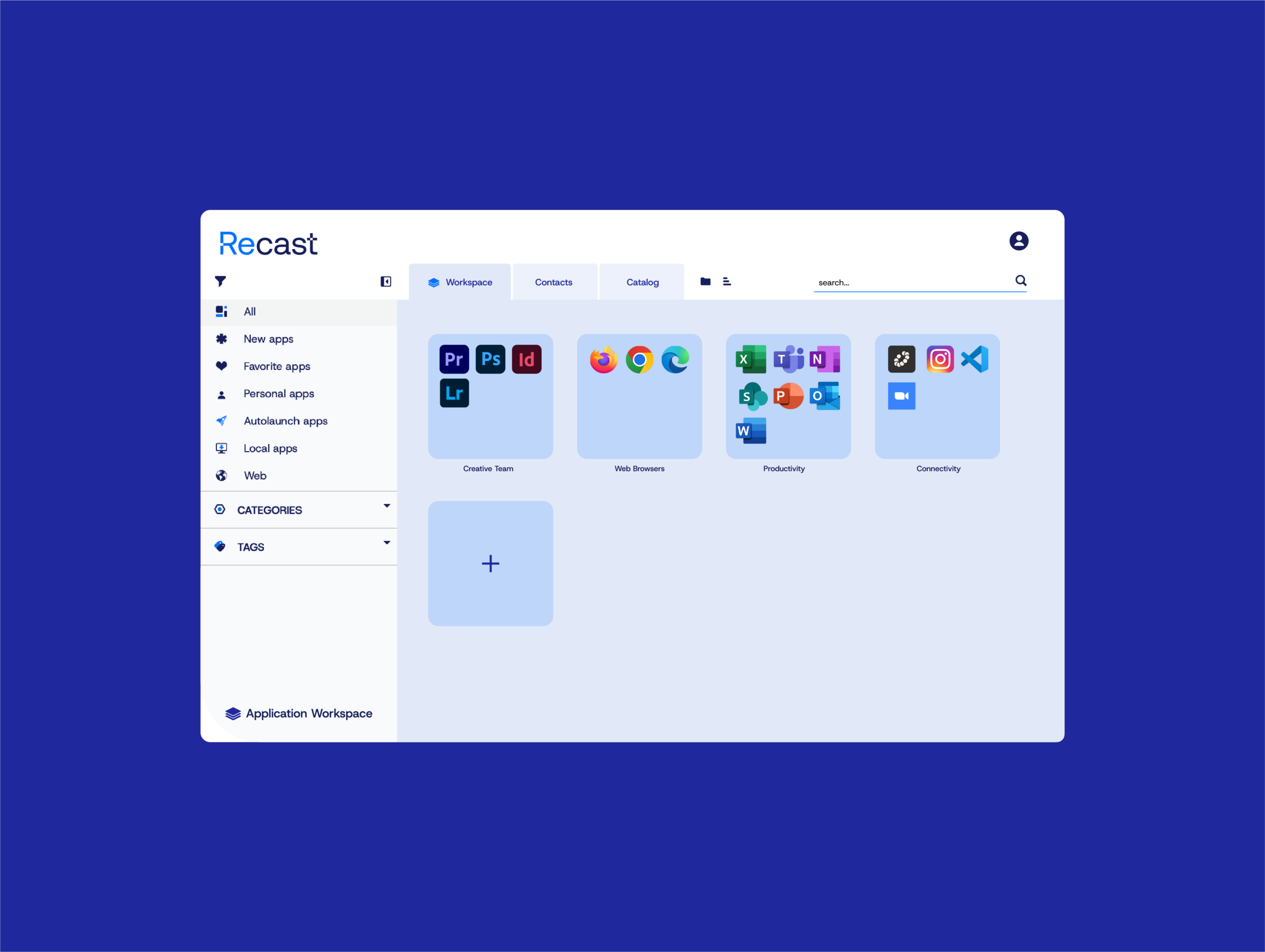
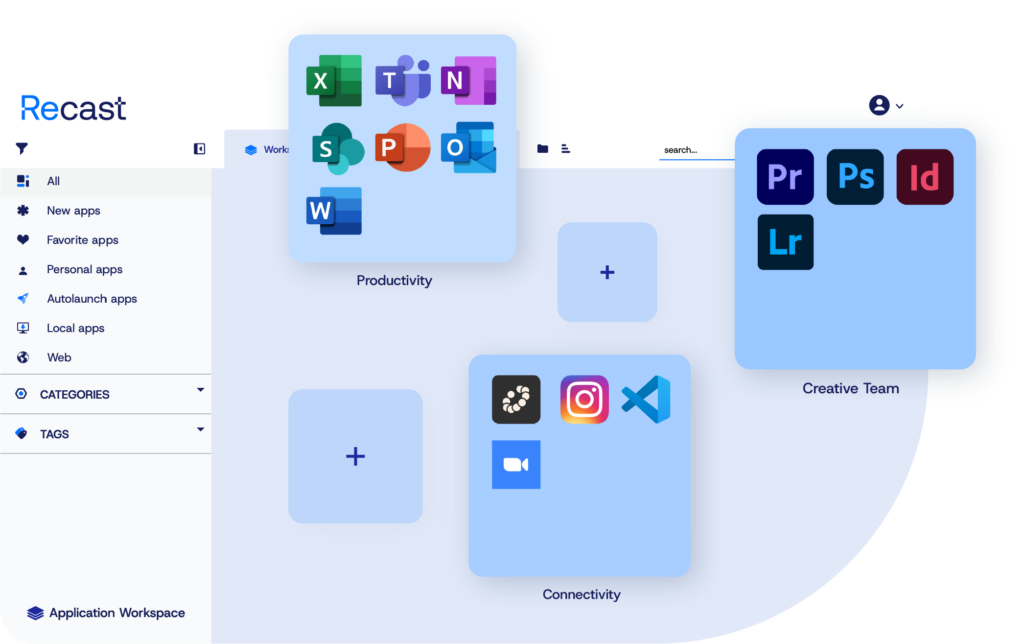
VDI solutions work best when applications keep up with them. Recast centralizes application delivery across physical devices, Cloud PCs, and virtual desktop environments, so one catalog covers local installs, web apps, and VDI sessions without separate workflows.
Publish applications once and make them available wherever people need them.
Works across your virtual desktop platforms
Deploy as SaaS or self-hosted, and phase adoption by site, department, or image.
Keep golden images lean and deliver apps and settings just-in-time after boot.

Test once, then deliver the same package to laptops, Cloud PCs, and Citrix/AVD with no repackaging.
Add Application Workspace alongside Citrix, Omnissa, AVD, Intune, or ConfigMgr and expand at your own pace. No rip-and-replace required.
Catalogs and shortcuts tie to identity, so access remains consistent across physical and virtual endpoints.
Promote versions through Dev/Test/Accept/Prod and phase production (canary → broad) with endpoint tags.
Keep thousands of titles current without nightly marathons; customizations persist as applications update.
One Smart Icon picks local, remote, or streamed based on device, network, and policy. Fewer tickets, fewer misroutes.

Canterbury Christ Church University modernized application delivery and cut configuration, deployment, and update time by about 90% while halving total cost of ownership. More than 30,000 students got self-service access to 100+ apps through a browser-based App Store, with the environment being stood up in about two days.
VDI isn’t disappearing. It’s evolving. See how IT leaders are adapting to Cloud PCs, hybrid work, and modern application delivery in our latest industry survey.
A VDI environment is the collection of infrastructure, virtual desktops, applications, policies, and access controls used to deliver desktop experiences to end users. Modern VDI environments often include a mix of technologies such as Citrix, Azure Virtual Desktop (AVD), Windows 365, and physical endpoints. As organizations adopt hybrid work, many users move between physical devices, cloud PCs, and virtual desktops throughout the day. Application Workspace helps unify application access across these environments, so employees see one consistent workspace regardless of where their applications are hosted.
Managing on-premises and cloud VDI often creates duplicate workflows, separate application delivery processes, and inconsistent user experiences. Application Workspace helps bridge those environments by providing a single application layer across platforms such as Citrix, Azure Virtual Desktop (AVD), Windows 365, and physical endpoints.
Instead of maintaining separate packaging and delivery processes for each environment, IT can package applications once and make them available across local devices, cloud desktops, and VDI from a single console. Users receive the same application experience regardless of where they work.
Organizations commonly face several challenges when managing VDI environments:
RDP by itself is not inherently secure. Known vulnerabilities and misconfigurations can expose organizations to significant risks, which is why securing RDP typically requires multiple additional controls. These can include preventing direct internet exposure, using a Remote Desktop Gateway or secure VPN solution, enabling Network Level Authentication (NLA), and implementing multi-factor authentication wherever possible.
VDI environments are generally more secure out of the box, as many of these security measures are built into the architecture. They provide secure access methods, centralized data storage, and greater administrative control over user environments.
That said, the overall security of a VDI solution still depends on proper implementation and ongoing management. Key best practices include strong endpoint protection, network segmentation, and automated patching of hypervisors and desktop images to maintain a secure environment.
A VDI connection is the session that links a user device to a virtual desktop or application hosted in a centralized environment. With Application Workspace, users can access local, web-based, streamed, or virtual applications through a single Smart Icon. Application Workspace evaluates the user's context, identity, device, network, and entitlements, then launches the appropriate application or virtual session automatically. This simplifies the connection experience for end users.